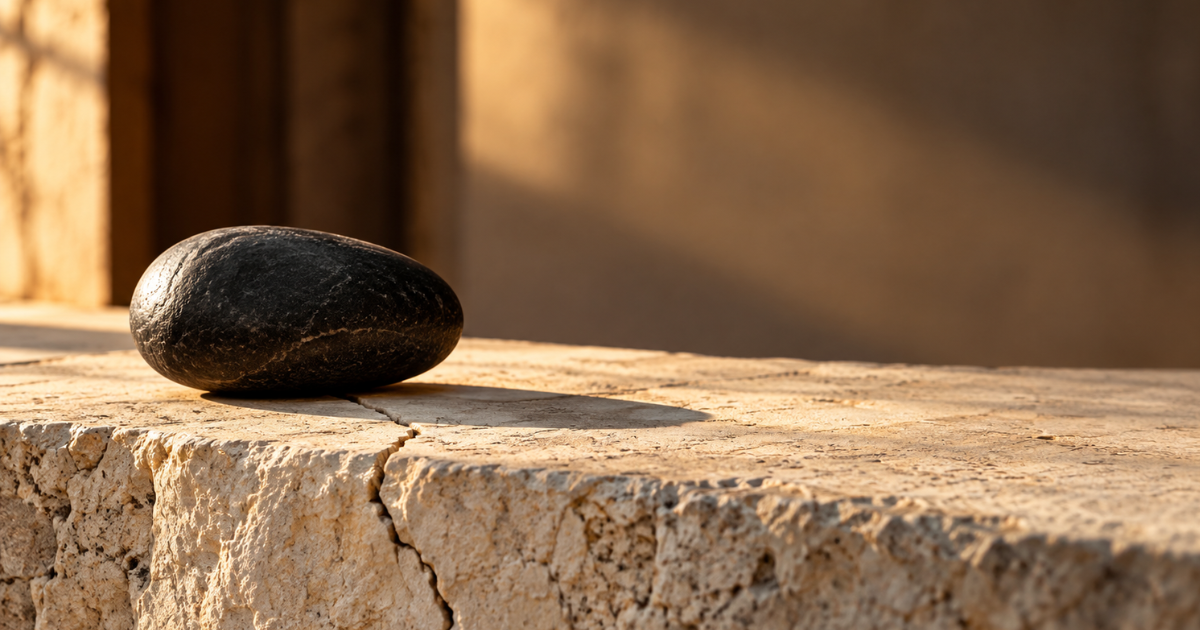
Most founders think resilience is something you find in the moment. The deal falls through, the client walks, the bank balance drops, and you dig deep.
That is not resilience. That is survival. And survival is expensive.
I have had a setback that could have ended everything I built. What got me through was not grit summoned on the worst day. It was what I had put in place long before that day arrived.
Resilience is built before the hit
We talk about resilience as bouncing back. The better question is what you are bouncing back onto.
If there is nothing underneath you, no structure, no standards, no reserves, you do not bounce. You fall, and you rebuild from the floor. Every time.
Resilient founders are not tougher than everyone else. They have simply built a business, and a self, that can absorb a blow without collapsing. That is a design decision, not a personality trait. Which means you can learn it.
The three things underneath you
1. Standards that don’t move
When pressure hits, the first thing to go is the standard. You skip the weekly review. You discount to close a deal you should have walked away from. You answer emails at midnight because you feel behind.
Resilient founders decide their non-negotiables in calm weather, so they are not renegotiating them in a storm. Write yours down. Three is enough. If you cannot name them, you do not have them.
2. Structure that carries the load
Motivation is unreliable. Structure is not. A fixed weekly rhythm, clear numbers you check every Monday, and a written plan for the next 90 days mean a bad week does not become a bad quarter.
When everything feels uncertain, structure tells you what to do at 8 a.m. tomorrow. That is often all you need.
3. Reserves you protect
Cash, energy, and attention. Most first-time founders run all three at zero and call it commitment. It is not. It is fragility.
Keep a cash buffer you do not touch. Protect your sleep like it is a revenue line. Guard a few hours each week where nothing is urgent. Reserves are what let you make a clear decision when everyone around you is reacting.
What it looks like on a bad day
Two founders lose their biggest client in the same week.
The first panics. He cuts his price for the next prospect, abandons the plan, and spends the month chasing anything that moves. By the time he steadies, he has trained his market to see him as cheap.
The second feels the same hit. Then she opens her plan. She has three months of runway, a pipeline she reviews every Monday, and a rule that she never discounts under pressure. She is shaken, but she is not lost. Within six weeks the gap is filled, at full price.
Same setback. Different foundation. Completely different outcome.
That is the point. Resilience is not how you feel when it goes wrong. It is what you already built for when it does.
One action this week
Block 30 minutes. Answer three questions in writing:
- What are my three non-negotiables, the standards I will hold even when it hurts?
- What is my weekly rhythm, and which numbers do I check every Monday?
- How many months of cash, and how many hours of clear thinking, do I have in reserve right now?
If any answer is vague, that is where your next setback will land. Fix it now, while the weather is calm.
The business will be tested. Build the version of you, and the structure around you, that is ready when it is.
This is the kind of foundation we build in The Foundation, a 12-week program for first-time founders. Not ready yet? Get The Letter: one idea and one action, every Sunday.
Leave a Reply